
𝗕𝘂𝗱𝗴𝗲𝘁 𝗳𝗼𝗿 𝗔𝘂𝘁𝗼 𝗮𝗻𝗱 𝗘𝗩𝘀 𝟮𝟬𝟮𝟲: 𝗟𝗼𝗻𝗴-𝘁𝗲𝗿𝗺 𝗺𝗮𝗻𝘂𝗳𝗮𝗰𝘁𝘂𝗿𝗶𝗻𝗴 𝗼𝘃𝗲𝗿 𝘀𝗵𝗼𝗿𝘁-𝘁𝗲𝗿𝗺 𝗱𝗲𝗺𝗮𝗻𝗱
Demand has not fallen off, and EVs -mainly two-wheelers and public transport, are slowly becoming part of the mainstream.
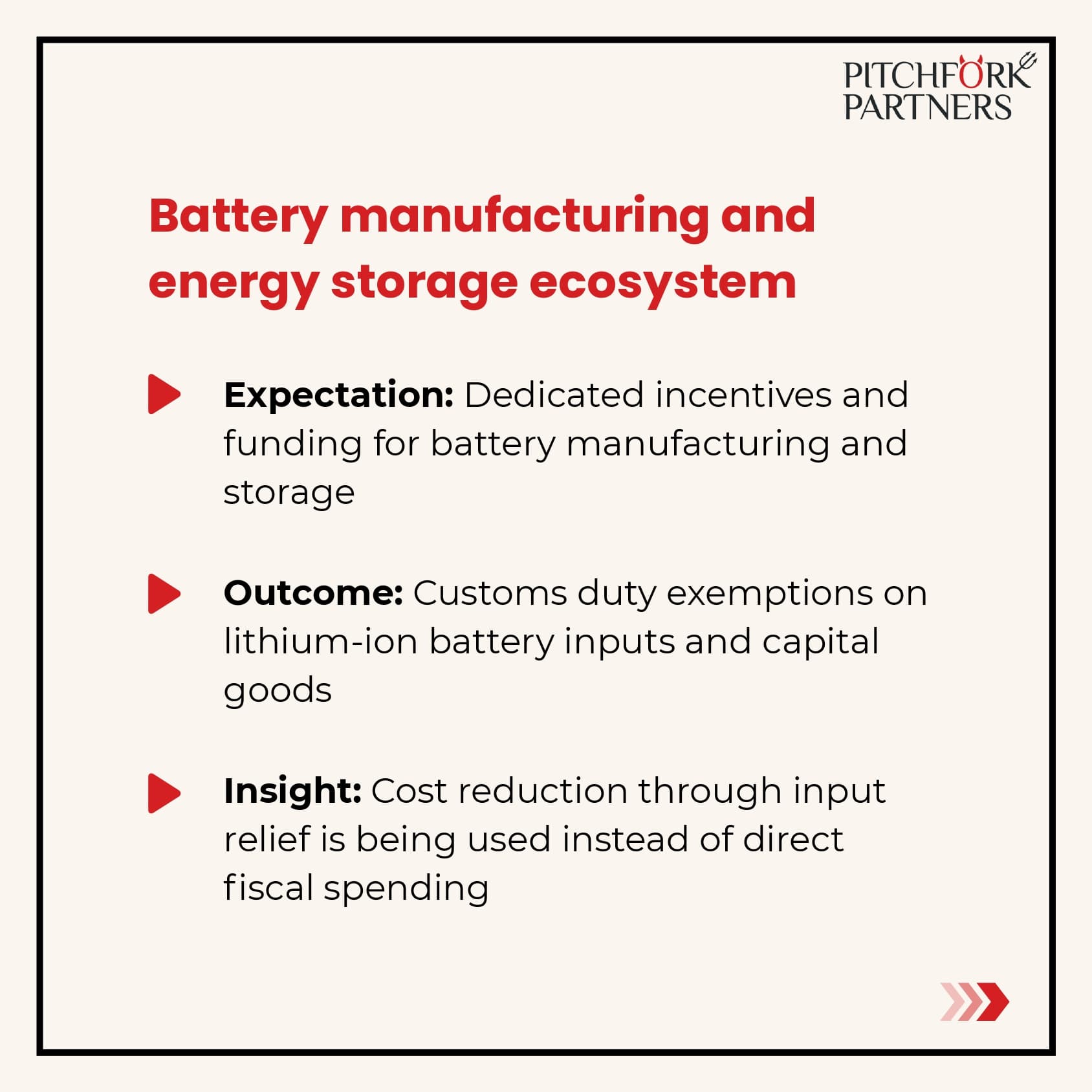
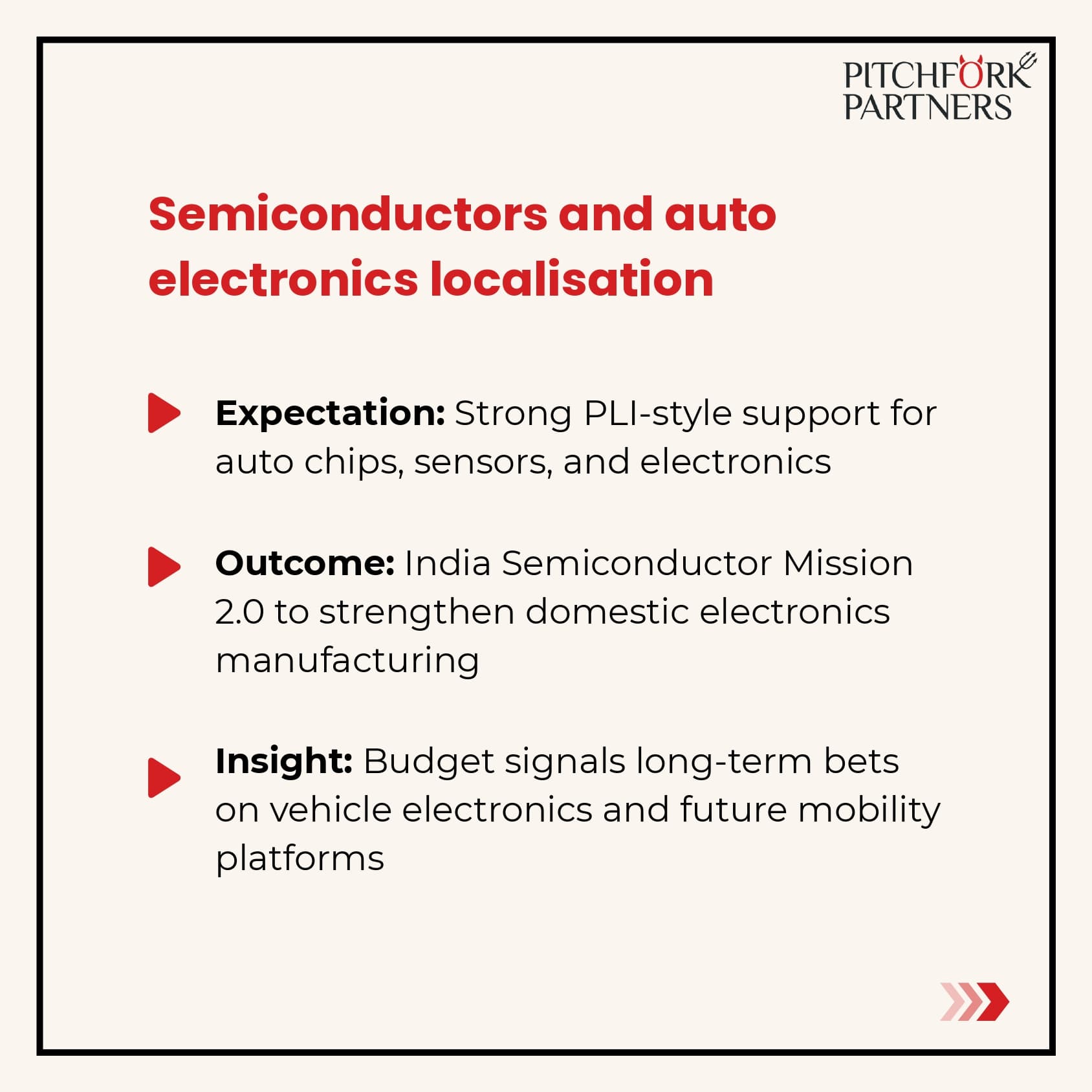
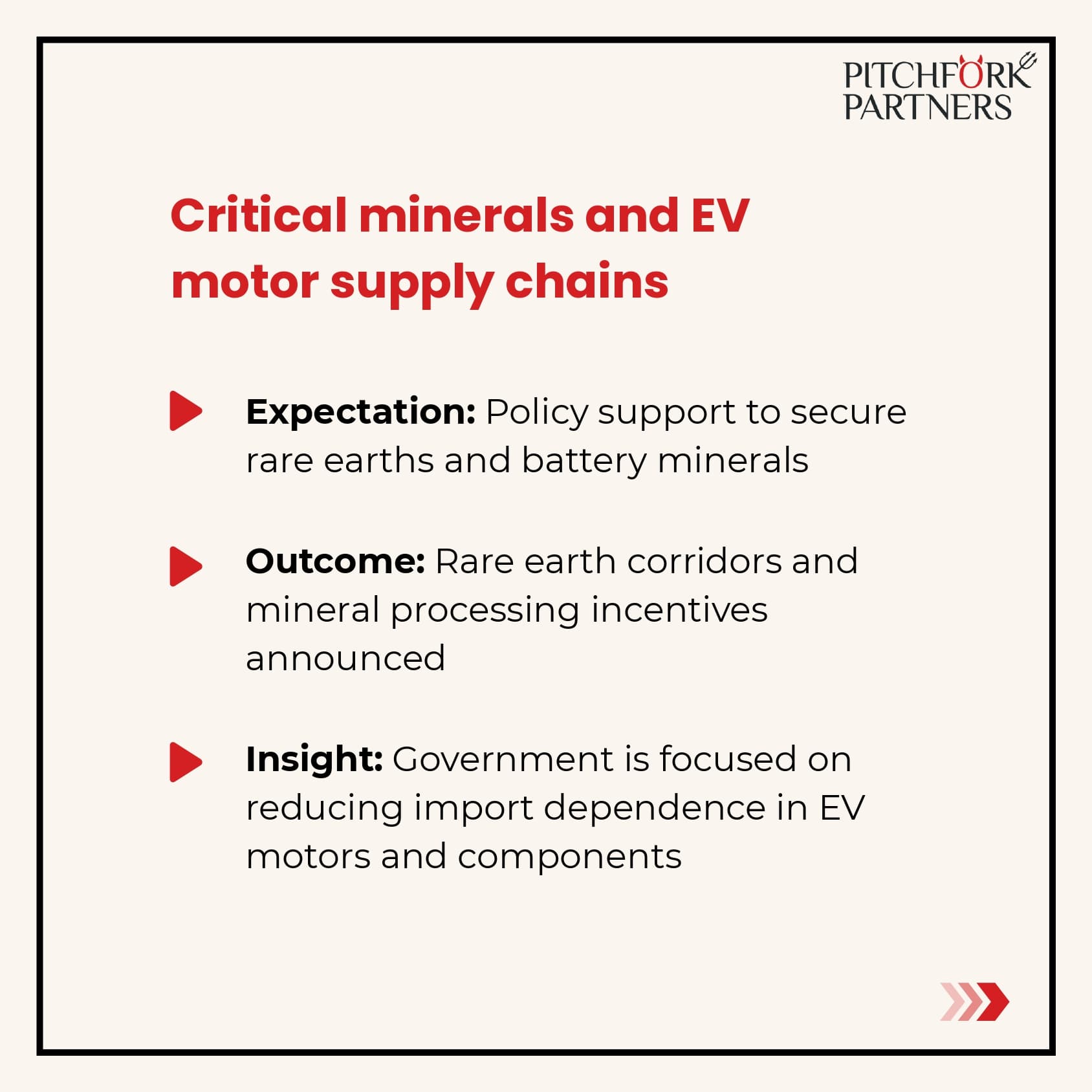
What does not show up in headlines is the pressure on manufacturers. Input costs are higher than they were a few years ago. Supply chains are still exposed to global disruptions and localising batteries, electronics and key components remains expensive and uneven.
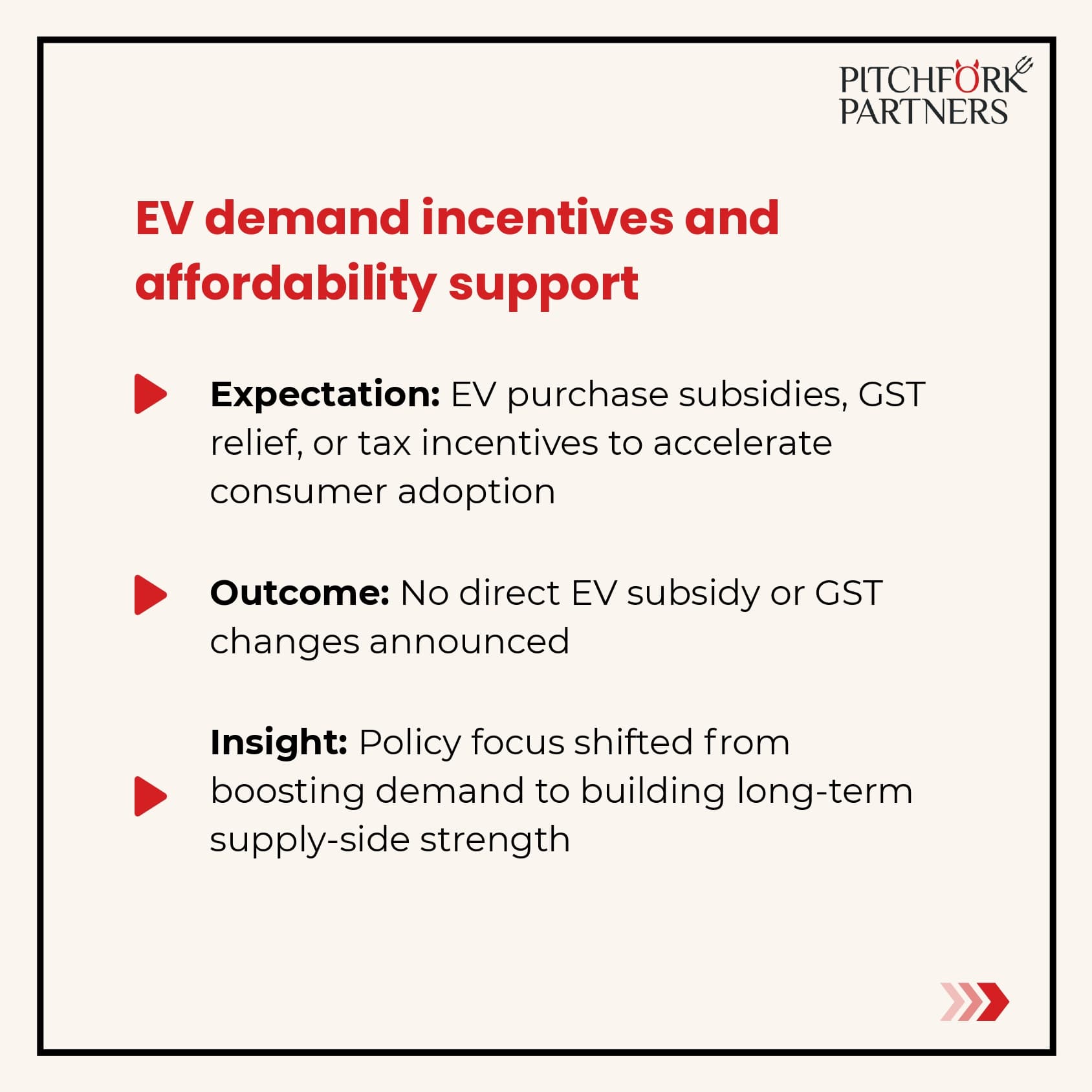
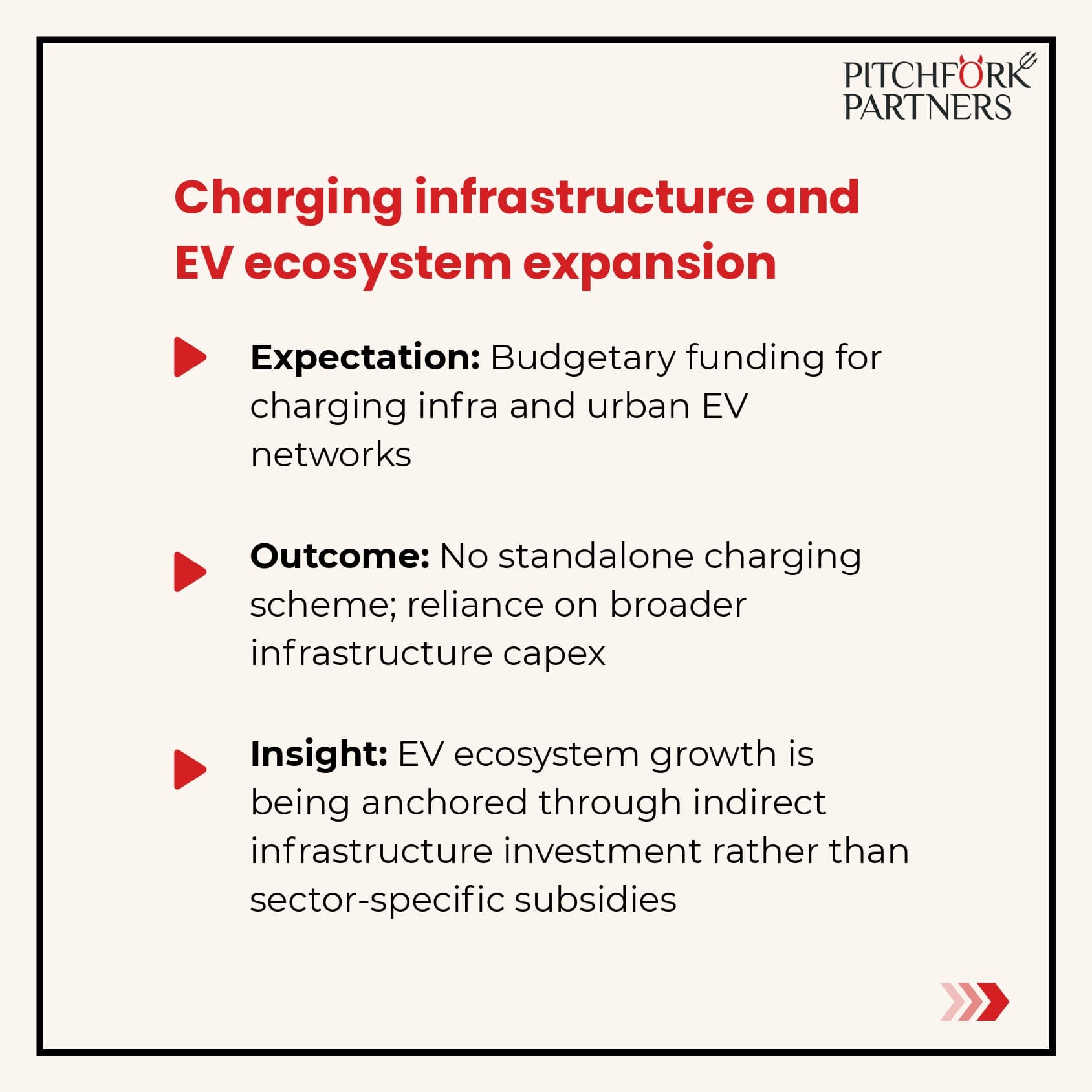
Going into Union Budget 2026, the expectation across the sector was straightforward. Some supported to keep EVs affordable, clearer spending on charging infrastructure and tax measures that would help maintain consumer confidence.
Instead, the Budget chose a longer road, focusing less on immediate consumption and more on strengthening the manufacturing backbone of India’s auto sector.

Pitchfork Partners
Budget analysis: Auto and EVs

insight